Acne Isn’t One-Size-Fits-All: What You Should Know About Hormonal, Bacterial, and Gut-Related Acne
As estheticians, we see it every day: clients walk through the door frustrated by acne that just won’t quit. They’ve tried countless over-the-counter products, switched up their routines, and maybe even cut out their favorite foods—all in the pursuit of clearer skin.
But here’s the truth: not all acne is the same, and the key to effective treatment lies in understanding what’s driving it. In fact, acne is rarely caused by just one factor. Most people experience breakouts driven by a combination of influences—like hormones, gut health, and the presence of acne bacteria on the skin. By knowing how to identify hormonal acne versus bacterial acne—and recognizing the growing role of gut health—you’ll be better equipped to educate clients and guide them toward solutions that actually work.
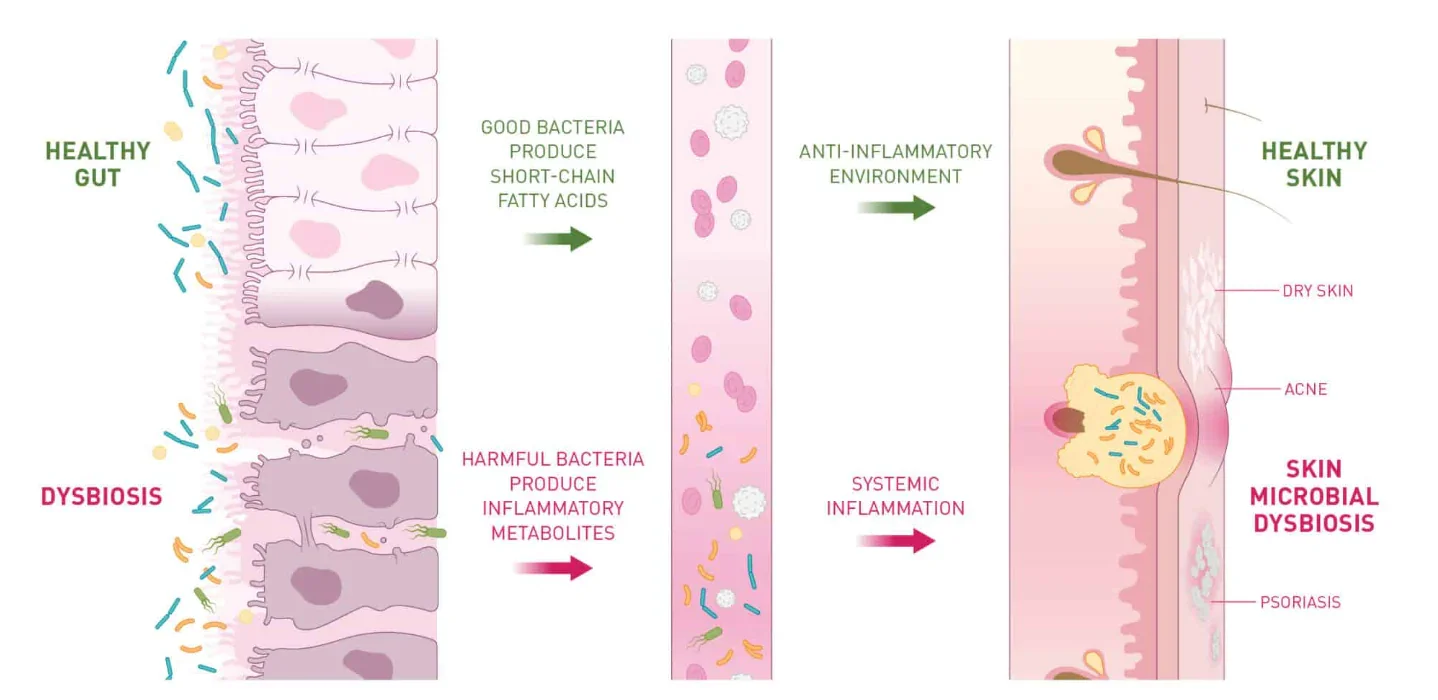
Photo from Codex
Hormonal Acne
The signs:
Deep, cystic lesions that cluster around the chin, jawline, or cheeks.
Flare-ups that follow the menstrual cycle or times of stress.
Often painful and stubborn, resisting quick fixes.
Why Hormonal Acne Happens:
Hormonal fluctuations—especially increases in androgens—can ramp up sebum production, which then creates an ideal environment for clogged pores and inflammation. Unlike surface-level congestion, this type of acne develops deep in the dermis, which is why it’s more painful and slower to resolve.
It’s also common for hormonal acne to overlap with other drivers, such as bacterial activity or gut imbalances, making a multi-pronged treatment plan essential.
Why it matters for you as an esthetician:
Clients with hormonal acne often feel like they’re “doing everything right” with cleansing and product use, yet still breaking out. Your role is twofold:
Educator: Help clients understand this is not due to “bad skin” or “skincare mistakes,” but rather internal hormone shifts. This builds trust and relieves guilt.
Support system: Set realistic expectations—hormonal acne can be managed and improved, but it may not vanish overnight.
Treatment & Coaching Considerations for Hormonal Acne:
Focus on calming inflammation and protecting the skin barrier rather than over-exfoliating.
Avoid overly aggressive extraction on deep cysts, which can worsen inflammation.
Recommend consistency and stress-reduction practices as part of a holistic plan.
Codex Solutions:
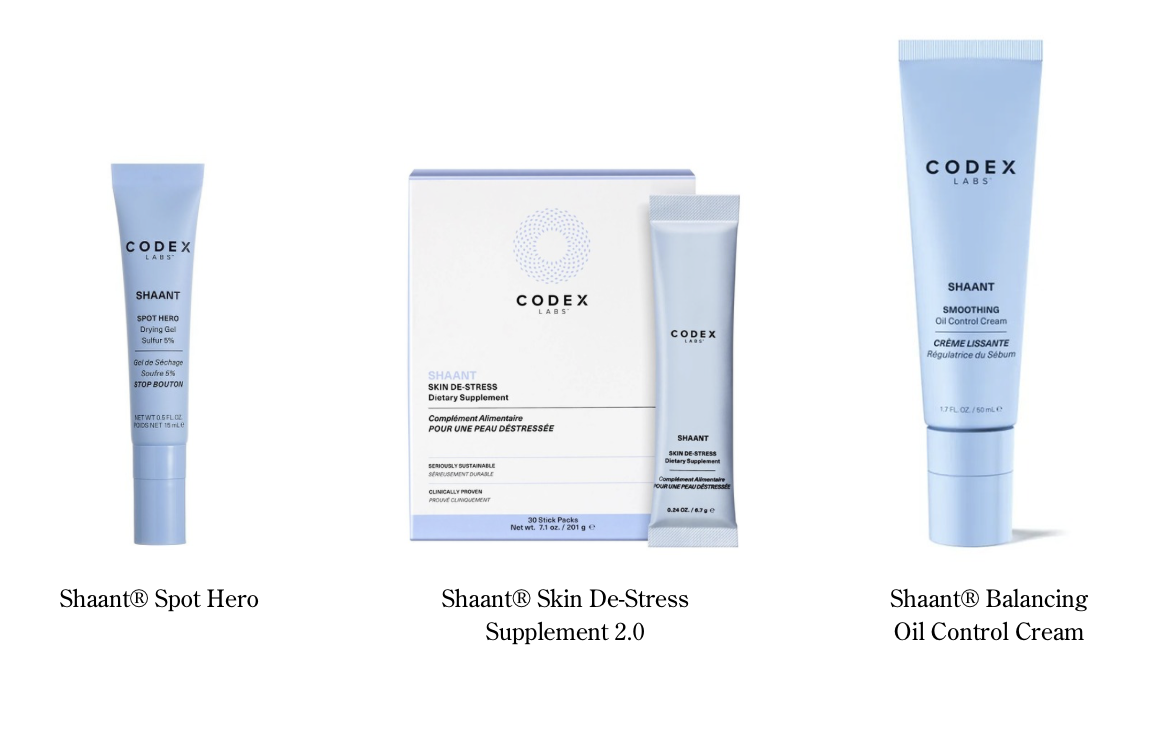
Shaant® De-Stress Supplement 2.0→ supports hormonal balance from the inside out, reducing the internal triggers that esties can’t treat directly in the room.
Shaant® Spot Hero → a targeted option for those painful cystic flares, helping reduce swelling and redness between treatments.
For maintenance, pair with Shaant® Balancing Oil Control Cream to help regulate excess sebum without stripping.
Bacterial Acne
Bacterial Acne Signs:
Whiteheads, blackheads, and pustules concentrated in oilier areas like the forehead, nose, and chin.
Breakouts that flare after wearing makeup, sweating, or touching the face.
Can range from mild congestion to more inflamed papules and pustules.
Why Bacterial Acne Happens:
When sebum and dead skin cells clog pores, Cutibacterium acnes (formerly P. acnes) bacteria multiply in the blocked follicle. The immune system reacts, leading to redness, swelling, and those familiar bumps. Unlike hormonal acne, bacterial acne is more about the local environment on the skin rather than internal hormone shifts.
Nearly everyone with acne has some degree of bacterial involvement, and that’s why addressing the skin externally, while also supporting internal balance, is so important
Why it matters for you as an esthetician:
Clients with bacterial acne often feel frustrated because topical triggers (makeup, sunscreen, sweat) can worsen things. They may over-cleanse, over-exfoliate, or strip the barrier in an attempt to “dry it out.” Your expertise is critical in teaching them that balance—not aggression—is the goal.
Treatment & Coaching Considerations:
Incorporate gentle exfoliation to help keep pores clear without overdoing it.
Focus on anti-inflammatory treatments to calm redness.
Stress the importance of a consistent, non-comedogenic home care routine.
Teach clients how to recognize potential triggers in lifestyle (dirty pillowcases, touching their face, etc.) without shaming them.
Codex Solutions:
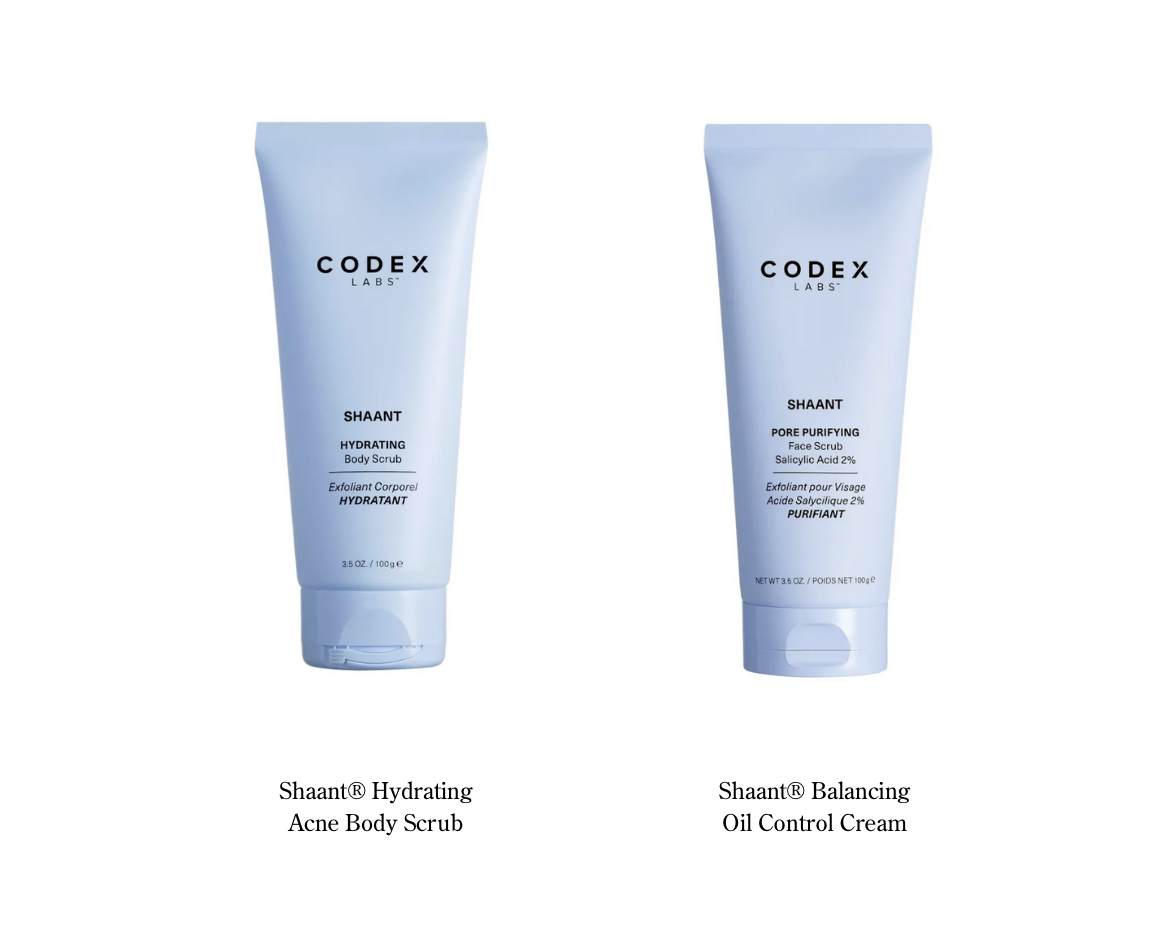
Shaant® Hydrating Acne Body Scrub → 2% Salycylic Acid gently exfoliates and hydrates while targeting bacne, unclogging pores, and soothing irritated skin for a clearer, smoother body.
Shaant Pore Purifying Face Scrub → A daily gentle exfoliator that removes impurities including dead skin cells and reduces the appearance of pores without stripping moisture or sebum
Gut-Skin Axis Acne
Gut Skin Acne Signs:
Breakouts that don’t seem tied to a cycle or obvious triggers.
Clients may also report bloating, digestive upset, or food sensitivities.
Acne that flares after antibiotics, illness, or major diet changes.
Why Gut Acne Happens:
Research increasingly shows a strong gut-skin connection. When the gut microbiome is out of balance (dysbiosis), it can drive systemic inflammation, which shows up on the skin. This can make breakouts more stubborn, widespread, and harder to connect to surface-level skincare habits.
Why it matters for you as an esthetician:
This is an opportunity to stand out as a whole-client educator. When clients feel like they’ve “tried everything” topically, introducing the concept of gut health broadens their perspective. You’re not diagnosing or treating medical issues, but you can connect the dots between internal and external care.
Treatment & Coaching Considerations:
Reinforce barrier repair in the treatment room—compromised guts often show up as sensitive, easily irritated skin.
Encourage clients to note any patterns between diet, stress, digestion, and breakouts.
Position supplements as an extension of their skincare routine, bridging the gap between esthetics and wellness.
Codex Solutions:
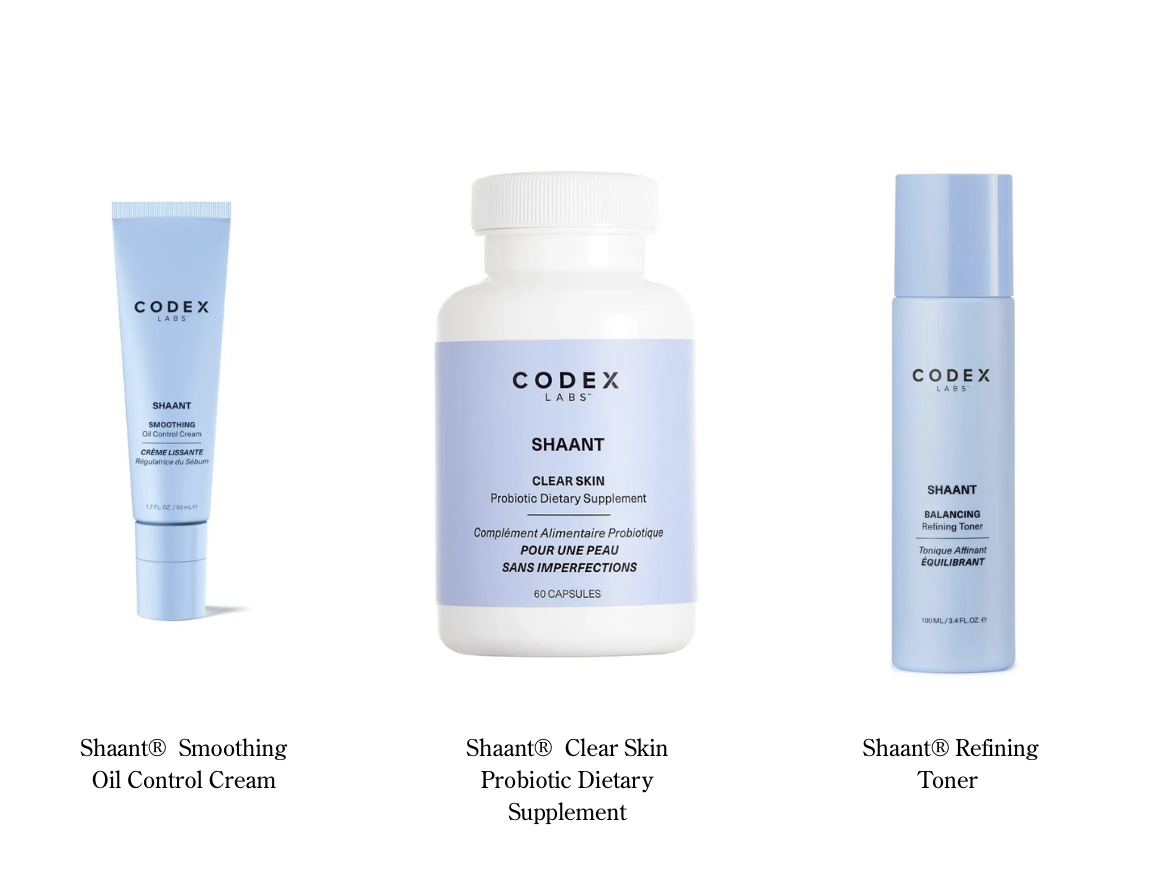
Shaant® Clear Skin Probiotic Dietary Supplement → supports gut microbiome health, reducing the systemic inflammation that can surface as acne.
Pair with Shaant® Balancing Oil Control Cream and Shaant® Refining Toner to reinforce topical balance while internal healing is underway.
How Estheticians Can Use Their Acne Knowledge in Practice
Assessment conversations: Ask about cycle patterns, stress, diet, and digestion when discussing acne history.
Skincare recommendations: Build routines that balance oil and inflammation without damaging the skin barrier.
Client education: Share how supplements, topical care, and lifestyle habits all work together.
Most importantly, emphasize that acne typically involves more than one root cause. By explaining that factors like bacteria, hormones, and gut health can overlap, clients better understand why both topical and internal solutions are needed—and why patience and consistency matter.
When clients understand why their acne is happening, they’re more likely to trust your guidance—and commit to a plan that works.

Photo from Codex
Supporting Your Clients with Codex
Codex Labs’ Shaant® Collection was designed with acne’s multiple pathways in mind:
Hormonal → Shaant® Skin De-Stress Supplement
Bacterial → Shaant® Clear Skin Probiotic + Shaant Balancing Cleanser
Stress-related flares → Shaant® Spot Hero
Gut-skin connection → Shaant® Clear Skin Probiotic Dietary Supplement
As estheticians, we know acne is more than a surface-level concern—it’s deeply tied to biology, lifestyle, and emotional well-being. And because acne can have multiple driving factors at once, supporting clients both inside and out is the most effective approach. By understanding the distinctions between hormonal, bacterial, and gut-related acne, you can elevate your client care and provide clear, science-backed solutions.
Codex Labs makes it easier by delivering a precision toolkit for both you and your clients. Because clear skin isn’t one-size-fits-all—and neither is the way you treat it.
This post is sponsored by Codex Labs.